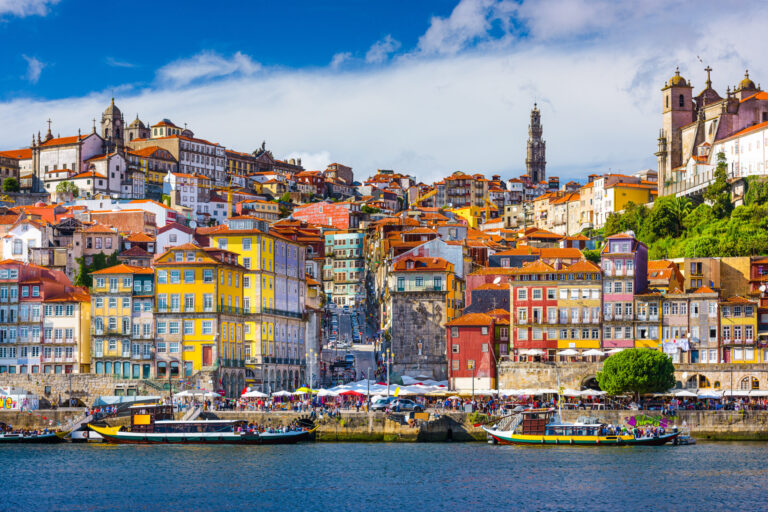
Portugal consistently ranks as a top retirement destination. That’s because it’s both stunning and, somehow, still affordable. The friendly locals and mild climate certainly add a lot, too.
But when you decide to retire here, along with all the excitement comes a lot of complicated questions.
What visa do you need? What can you expect things to cost? Where should you look for a place to live?
We answer these questions and more below.
Table of Contents
ToggleVisa Options for Retirees
Retiring in Portugal is straightforward, especially if you’re an EU/EEA citizen. EU retirees only need to register their residence locally after a 90-day stay, which sets them up for a five-year certificate they can then renew for permanent residency.
But retirement is surprisingly easy for non-EU citizens, too. You’ll probably utilize one of two pathways: the D7 “Retirement” Visa and the Golden Visa.
D7 Visa
The D7 Visa, also known as the Passive Income Visa, is perfect if you have stable income sources like pensions or rental properties.
You’ll need to show income matching Portugal’s minimum wage, currently about €870 per month. Additional amounts apply for dependents—€435 extra for a spouse and €261 per child.
You’ll have to provide financial statements, health insurance, a clean criminal record, and evidence of Portuguese accommodation. After approval, you’ll initially receive a four-month entry visa, and you’ll exchange it for a two-year renewable residency permit in Portugal.
After keeping this updated for five consecutive years, you’re eligible for permanent residency or Portuguese citizenship (but the latter requires being able to test as proficient in the language).
Golden Visa
The Golden Visa, designed for wealthier retirees or investors, requires substantial financial investment, typically €500,000 in investment funds or €250,000 in cultural donations.
Recent restrictions on real estate investments in densely populated areas necessitate careful review. Nevertheless, the Golden Visa remains attractive due to its minimal annual stay requirement—just seven days out of the year. It offers similar residency benefits, and it is a pathway to full citizenship after five years.
Learn more about the Golden Visa here.
Cost of Living for Retirees
Portugal’s affordability is a huge part of its appeal. Compared to North America and Northern Europe, overall living expenses are roughly 30–40% lower. You can see our full breakdown of the cost of living in Portugal here.
For our purposes here, let’s look at healthcare costs, a key consideration for any retiree.
Portugal’s public healthcare system (SNS) offers comprehensive coverage with very low co-pays—general practitioner visits typically cost only €5–€10. Prescription medications are subsidized, often significantly discounted for seniors.
Retirees often supplement public care with private insurance for quicker access to specialists and private hospitals. Private plans start from as low as €30 monthly and rarely exceed €150 per person, depending on age and coverage.
Overall, retirees can live comfortably in Portugal on monthly budgets between €1,500–€2,500, which covers just about everything: rent, utilities, healthcare, groceries, and even leisure activities.
Expat Retiree Community and Fitting In With the Locals
As more and more people move to Portugal, it’s fostered a lot of surprisingly vibrant expat communities, and connecting with these people really helps lead to a smooth integration.
But even beyond expat communities, there are plenty of chances for connection. English proficiency among locals is high.
With that in mind, let’s look at some great options for places to retire:
- The Algarve region, Portugal’s southern coastal area, is the most popular retirement destination. And it has a lot of standard amenities for this kind of thing: sunny climate, beaches, golf courses, etc. Towns like Lagos, Tavira, and Albufeira have many expats.
- Lisbon and nearby Cascais are much more cosmopolitan, but they are also seaside. Lisbon has a thriving culture and great infrastructure, both of which attract many international retirees. Cascais is favored by affluent retirees—it’s a bit more quiet and serene while giving you somewhat easy access to Lisbon’s many amenities.
- The quieter Silver Coast and central Portugal attract retirees who want more affordability and love the authentic culture.
- Northern Portugal, particularly Porto and surrounding regions, are again affordable and give you a much more Portuguese experience. While the expat community here is smaller, it’s growing steadily.
- Portugal’s islands—Madeira and the Azores—give you still other great options. Madeira’s subtropical climate, mild weather, and established expat scene make it a favorite. The Azores, quieter and more remote, suit those retirees seeking a very, very tranquil area.
Climate Considerations
Despite its relatively small size, Portugal’s climate varies significantly. So depending on your preferences, you’ll want to be sure you know what to expect.
The coastal areas offer mild, Mediterranean climates—and that means hot summers that are a little tempered by ocean breezes. The winters here and pretty mild, pretty rainy.
Northern coastal towns like Porto experience cooler, wetter conditions, whereas Lisbon balances sunny summers and comfortably mild winters. But you can go full sunny and warm with the Algarve—that’ll get you 300 days of sunshine a year with a very mild winter..
Inland regions experience more extreme temperatures, both hotter in the summer and colder in the winter.
Portugal’s Atlantic islands provide uniquely mild climates year-round.
Spending Your Golden Years in Portugal
Retiring in Portugal is affordable, beautiful, and opens you up to many extraordinary benefits.
As you navigate your way to retirement in Portugal, be sure to contact us if you have any questions at all. Our experts would be happy to hop on a free call with you.